
The secret behind flawless makeup
Share
Share
Copy
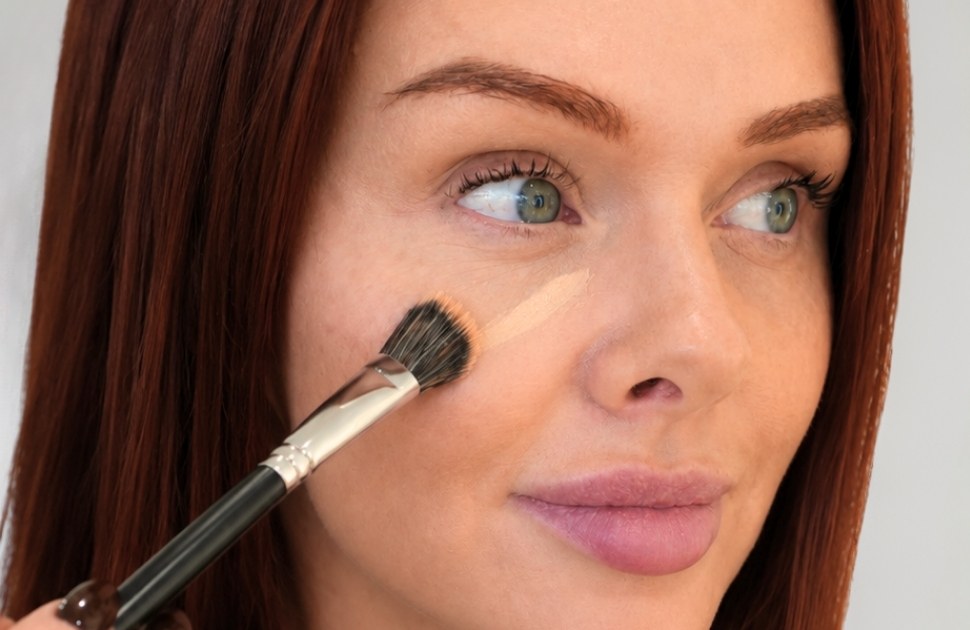
We all have at least one trusty concealer and foundation in our makeup kit. But sometimes these products fall short in covering the different tones and pigments in our skin. Rather than adding more product, achieving a flawless base requires a shift in approach, one rooted in the principles of the colour wheel. Let’s talk about colour correction.
Professional makeup artist Courtney Thomas (@courtneythomasmua) teaches us how to navigate the wonderful, and sometimes confusing, world of colour correcting to help you achieve the perfect makeup base.
What is colour correction?
Colour correction is a beauty trick used by professionals to achieve an even, flawless base for their makeup look. Utilising colour theory, this technique uses colours to offset and neutralise the appearance of uneven skin tones. The fundamental rule of colour correction relies on complementary colours. When shades that sit directly opposite one another on the colour wheel are layered, they cancel each other out, resulting in an even tone for a makeup base.
 How do I know what colour corrector to use?
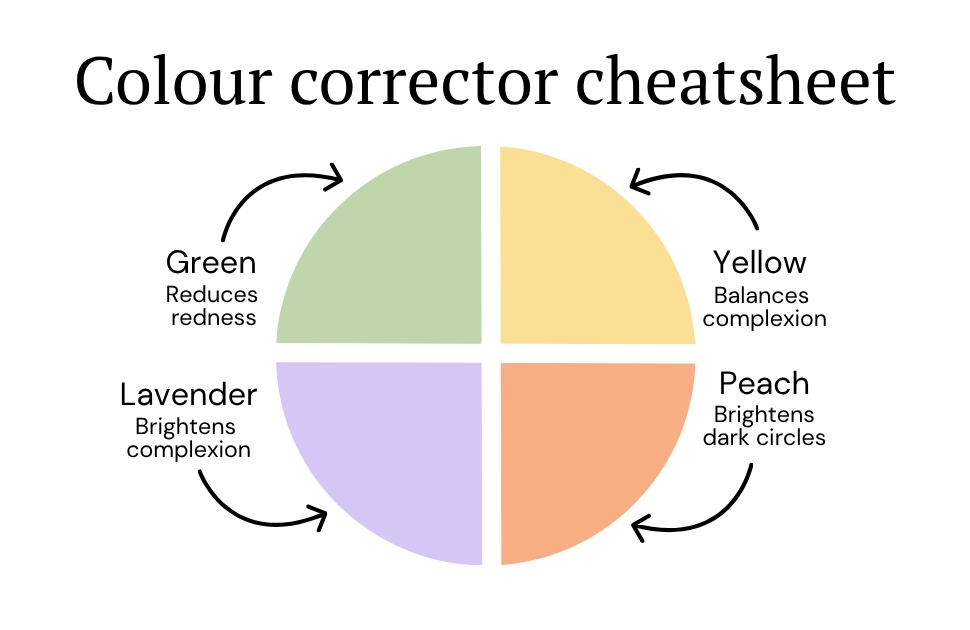
Before running to Northland to pick up any shade of colour corrector, it’s important to identify a particular concern you would like to address. Is it redness? Dark under eyes? Pigmentation? Dullness? Once you pinpoint the target area, selecting the appropriate hue becomes much simpler. Colour correctors come in many shades, each with a specific purpose.
It’s also important to note that no one rule applies to all. Deeper skin tones will require a deeper shade within the colour family to achieve the desired result.
What does a green colour corrector do?
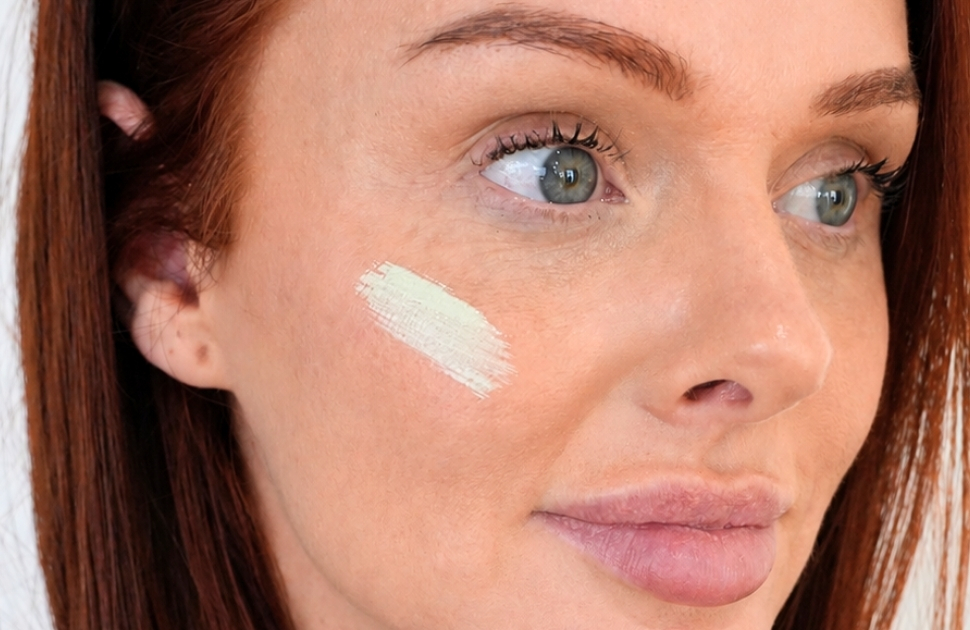 Green colour correctors might be the most intimidating of every shade. But they’re the most versatile and easiest to use out of all of them. Green is the perfect opposite of red on the colour wheel. Therefore, it’s best to use it on areas that have redness. Blending a green shade onto blemishes, rosacea, or areas with general flushing can help neutralise redness. Remember, the goal isn't to completely cover the skin; it's simply to balance the tone before foundation.
Find a range of green concealers from Mecca. We even recommend ISAMAYA Colour Correcting Serum, M.A.C Studio Fix 24HR Colour Corrector from Myer, KIND Collective Cover Up Colour Correcting Concealer from Priceline Pharmacy or even GIVENCHY Prisme Libre Skin & Color Serum Primer- Green from Sephora to achieve the same results as Courtney.
What does a pink & peach colour corrector do?
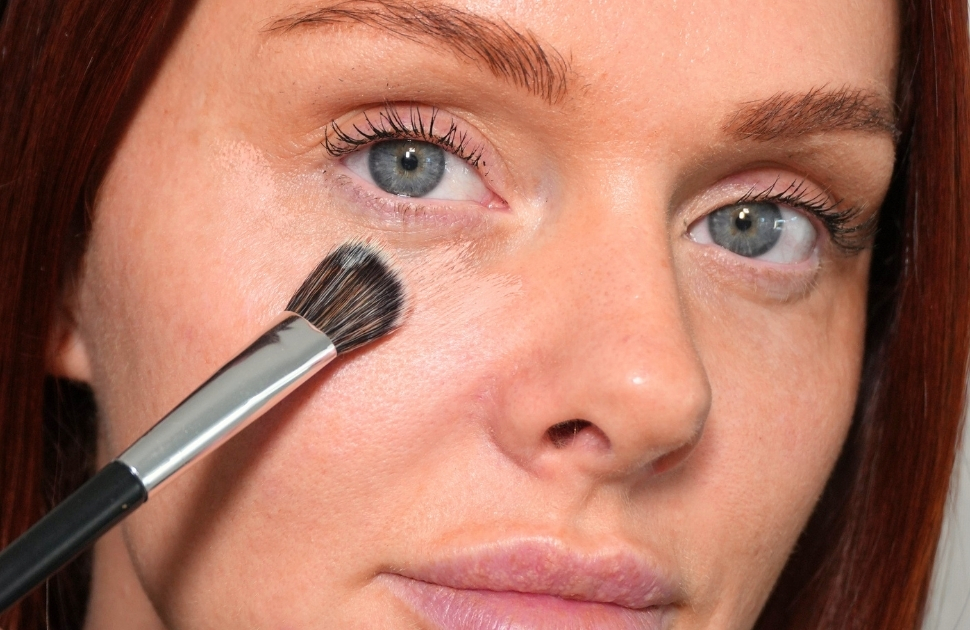 Pink and peach tones are ideal for those looking to brighten the complexion and balance out dark under eye circles. These shades work by counteracting cool, blue tones under the eyes, helping the area appear more awake and refreshed. While both shades have the same effect, they do have some subtle differences. Generally, pink works beautifully on fair skin with cooler undertones, while peach suits light to medium skin tones. Rich peach and orange tones work best on deeper complexions or more prominent pigmentation.
Brighten your complexion and balance dark under eyes with Morphe Wakeup Artist Under Eye Correcting Concealer from Mecca, Clinique Even Better All-Over Primer & Color Corrector from Myer or Huda Beauty #FauxFilter Color Corrector from Sephora to achieve the same results as Courtney.
What does a yellow colour corrector do?
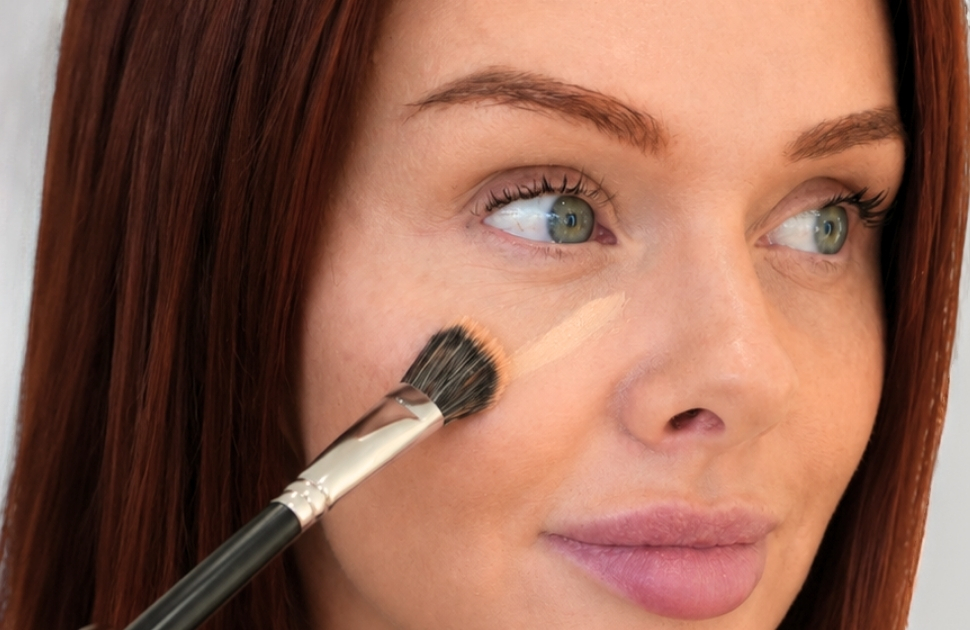 Yellow colour correctors work to bring to bring warmth back into your complexion and neutralise the appearance of dullness. This may sound similar to how pink and peach shades work, but yellow colour correctors work best with purple discolouration. Think, visible veins, dark spots, and some under eye circles. Choose a lighter, more pastel yellow if you have fair skin with neutral undertones, or a deeper, golden hue if your skin tone is richer with warm undertones.
Find the best yellow colour corrector shade for you at Mecca. Courtney’s recommendations include Tower 28 Swipe Serum Concealer and MECCA MAX Life Proof Camo Colour Corrector from Mecca.
Why use a lavender colour corrector?
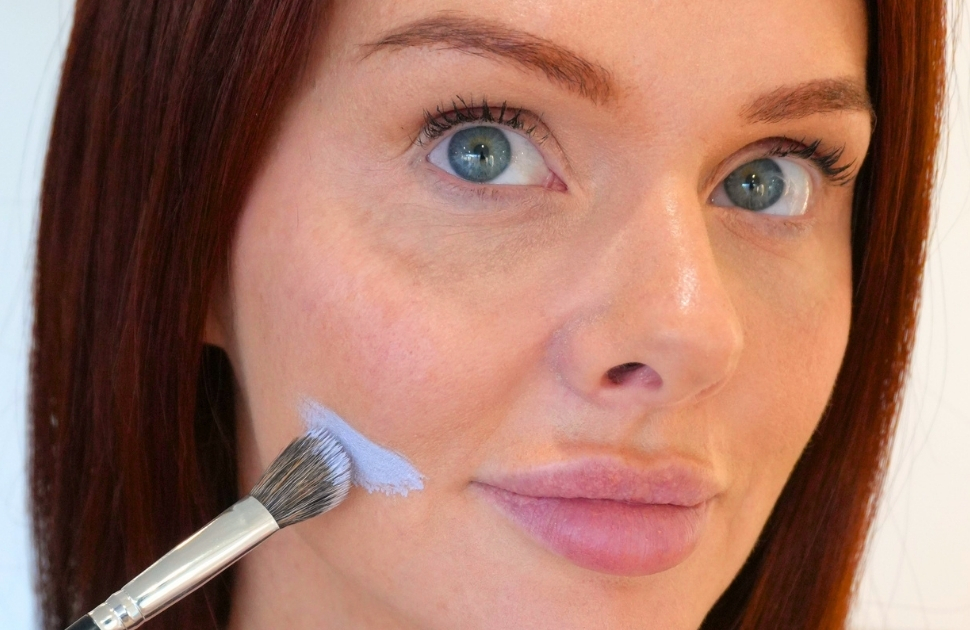 Purple and blue colour correctors bring brightness to your skin. These shades neutralise the yellow undertones and can help add life to dull-looking skin. Lavender colour correctors work particularly well to counteract sallowness and give your complexion a more refreshed, radiant look.
Achieve a more radiant look with lavender colour correctors at Sephora. Follow Courtney’s recommendation of tarte Shape Tape™ Hydrating Color Corrector from Sephora to achieve the same results.
If you need a quick refresher, here’s how the colour wheel makes colour correction easy by using opposite shades to cancel each other out. All you need to do is match the correct colour to the discolouration you want to neutralise.
- Orange cancels out blue
- Yellow, peach, and pink cancel out purple
- Green cancels out red
(and vice versa!)
Those with fair skin can opt for colour correctors with pastel tones. Medium or olive-toned skin? Try warmer hues! For deep skin, reach for richer, more pigmented tones.
Colour correction isn’t a rigid, one-size-fits-all rule. It’s a tool to make your space easier. By mastering these simple principles of colour theory, you can target imperfections with precision, use less foundation, and confidently unlock your most seamless, natural-looking base yet. Don't be afraid to experiment and find the shades that work best for your skin tone, undertone, and individual concerns.
Find your perfect match and to achieve your dream complexion from Health and Beauty stores at Northland.
Share
Share
Copy
- 2-50 Murray Rd, Preston VIC 3072, Australia
- Call us (03) 9478 1399
- Get directions via Google
